
The reimagined Glasgow 2026 Commonwealth Games demonstrated what can be achieved when experience, collaboration, and operational agility come together.
With a significantly compressed planning timeline, Glasgow took on the challenge of delivering an international sporting event at scale while maintaining the quality of experience expected by athletes, officials, partners, and the broader Commonwealth sporting community.
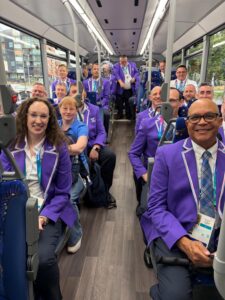
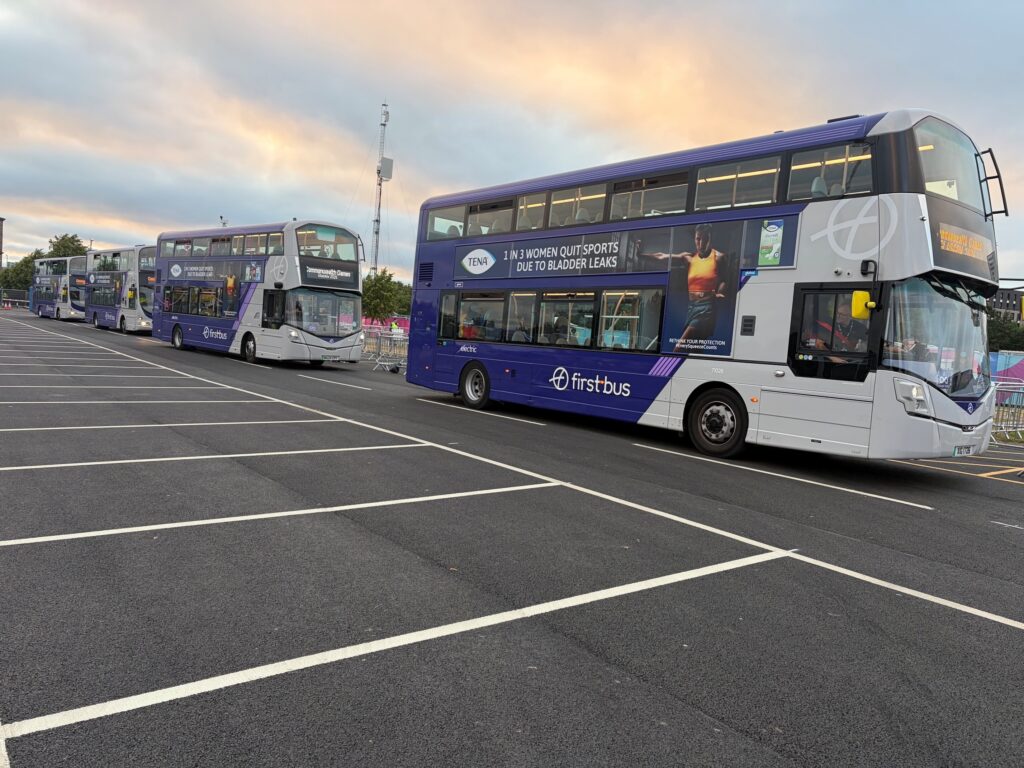
For TMS, the Games provided another opportunity to put decades of major event transportation experience into practice. Working alongside our partners, TMS helped deliver constituent bus services for Athletes & Team Officials, Technical Officials, and the Games Family throughout the operational period.
The result reinforced an important lesson for the events industry: even when timelines and operating environments change, the fundamentals of successful transportation remain the same — strong partnerships, experienced teams, adaptable planning, and a relentless focus on execution.
Collaboration as an Operational Strategy
Major event transportation is rarely delivered by a single organization. Success depends on multiple teams, operators, suppliers, and stakeholders working as one coordinated operation.
For Glasgow 2026, TMS renewed a partnership first established during the 2014 Games with the First Group of companies. This time, TMS worked alongside First Travel Solutions (FTS) and First Glasgow to develop and deliver an integrated bus services programme.
The concept itself evolved from early thinking by Stuart Turner and Rob West and was further developed by TMS and FTS as planning progressed.
That collaboration proved especially important given the accelerated timeline. From concept development through operations, teams needed to make decisions quickly, adapt as requirements evolved, and maintain alignment around a common objective.
Darren Platts, Andy Scholey, and Joe Bryant played important roles within the programme, with Joe’s Bus Services leadership and close collaboration with the TMS team helping bring the operation together.
From Planning to Operations in Six Months
One of the defining elements of Glasgow 2026 was the speed at which the transportation programme moved from concept to delivery.
In barely six months, the TMS team progressed from concept of operations development through detailed planning, operational delivery, and after-action reporting.
Leading the TMS effort was Roy Wood, who worked with the Organising Committee and project partners to translate the original transportation concept into an executable operation.
Supporting that effort was an experienced team of transportation professionals including Will Tombe, Chris Barron, Andy Bryant, Gary Neilson, Ross Muir, Steven McMillen, Antony Perrot Howarth, Poppy Newman, Victoria Brookes, and Kenny Hamilton. David McCrae and Nathalie Deutsch joined the operation following their TMS FIFA World Cup duties, bringing additional major event experience to the team.
The compressed planning period reinforced several principles that apply across major event transportation:
- Experience creates agility: Teams that understand major event operations can make informed decisions quickly without losing sight of the larger transportation strategy.
- Clear operational leadership matters: Defined responsibilities and strong communication become even more important when planning timelines are compressed.
- Plans must be adaptable: Major events evolve continuously, requiring transportation programmes that can respond without compromising service.
- Partnerships extend operational capacity: Close coordination between planning teams, operators, suppliers, and the Organising Committee allows individual organizations to function as one operation.
Designing Transportation for an Inclusive Games
Glasgow 2026 also featured the proportionally largest inclusive Parasport programme in Commonwealth Games history.
That commitment to inclusion introduced another important consideration for the transportation programme: accessibility could not be treated as a separate service. It needed to be incorporated into the broader operational plan.
The TMS team worked with partners to develop transportation solutions capable of supporting these requirements while maintaining consistent standards for safety, reliability, and service.
Adapted vehicle partner Blue Bus played an important role in that effort, providing specialist vehicles and dedicated operators to support the Parasport transportation programme.
Coach provider partners Parks, MacPhails, and Photoflash also contributed vehicles, drivers, and operational support throughout the Games, alongside the bus services provided by First.
Together, these partnerships demonstrate an increasingly important principle for major events: successful mobility must be designed around the needs of every constituent group from the beginning.
When Great Transportation Goes Unnoticed
At TMS, we often say that successful event transportation should go largely unnoticed, much like an outstanding referee or official on the field of play.
For athletes, officials, and guests, transportation should simply work.
Vehicles arrive when expected. People know where to go. Services respond when conditions change. Passengers reach their destinations safely and efficiently.
Behind that simplicity, however, is an extensive network of planning, coordination, communication, and real-time decision making.
Glasgow 2026 demonstrated the value of getting those fundamentals right. Despite an accelerated planning environment and the complexity of an international multi-sport event, the transportation programme delivered the level of service expected on a global stage.
Looking Ahead
Glasgow 2026 will hold a unique place in the TMS story, but the lessons extend well beyond a single Games.
As cities and organizing committees continue preparing for increasingly complex international sporting events, transportation programmes will need to become more collaborative, adaptable, inclusive, and integrated into the overall event experience.
Glasgow showed what is possible when experienced teams and trusted partners unite around a shared operational vision.
For TMS, it was a privilege to contribute to that effort and to work alongside the many people and organizations that brought the transportation programme to life.
The Games may be over, but the experience and lessons from Glasgow will continue to inform how we approach the next major event — and the next challenge in global mobility.
Learn more about TMS’ Sporting & Special Events Transportation Solutions.